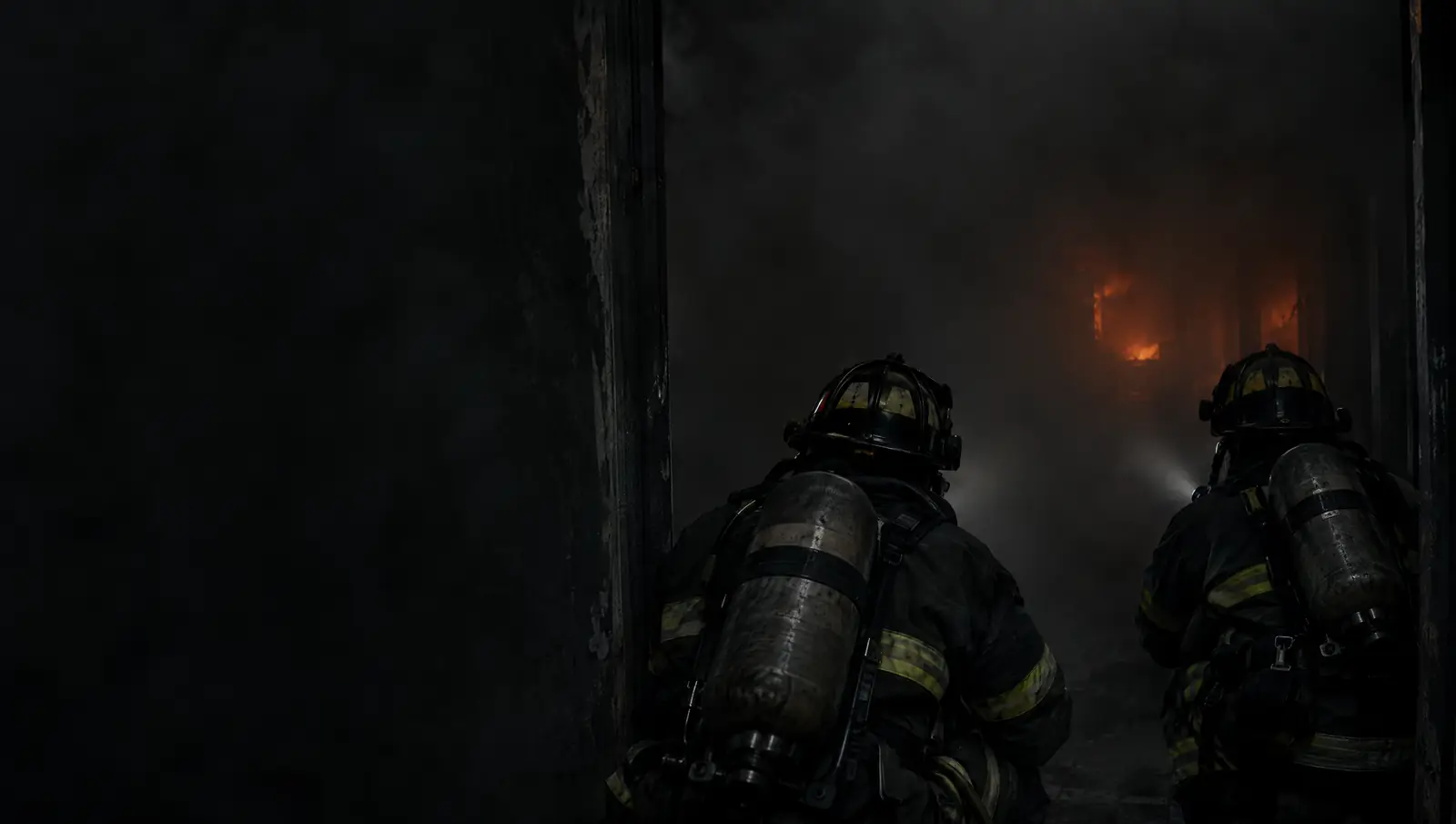
Smoke is a blindfold
Crews go in without knowing where the fire is, which way it is running, or who is still inside. The first person through the door is the one who finds out.
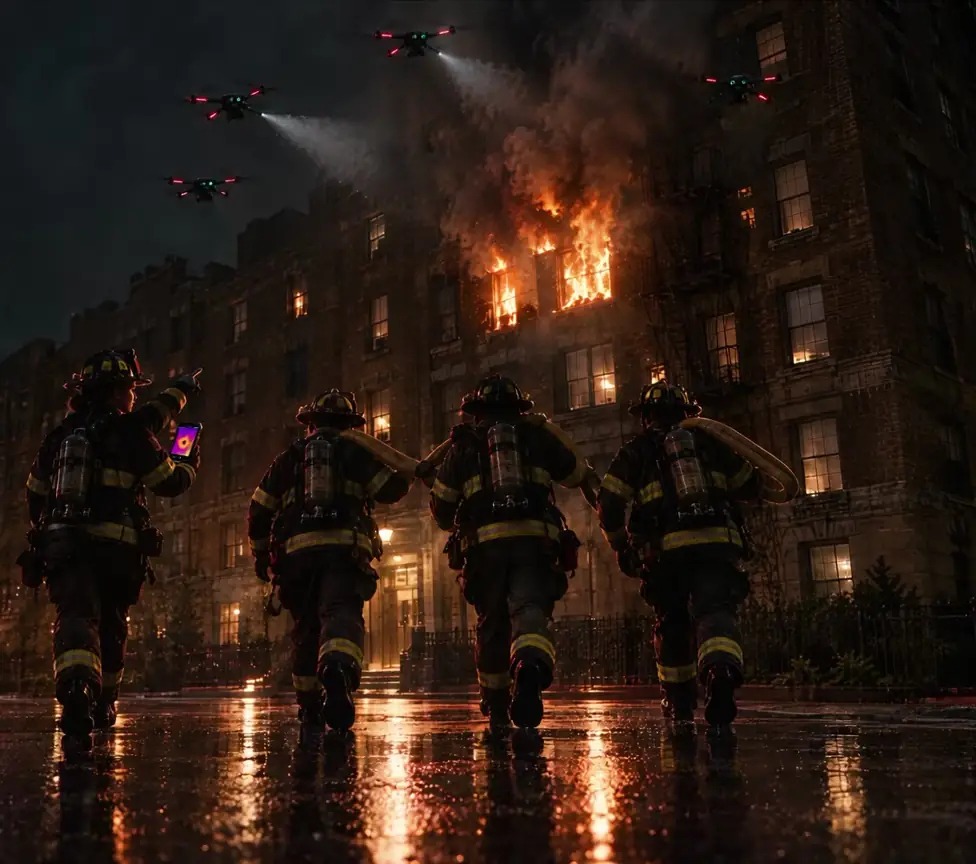
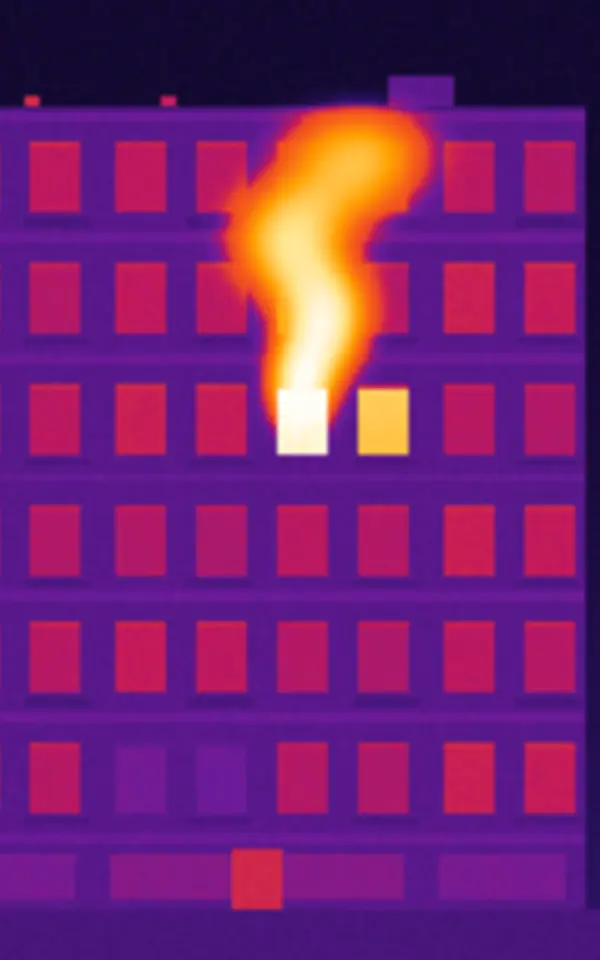
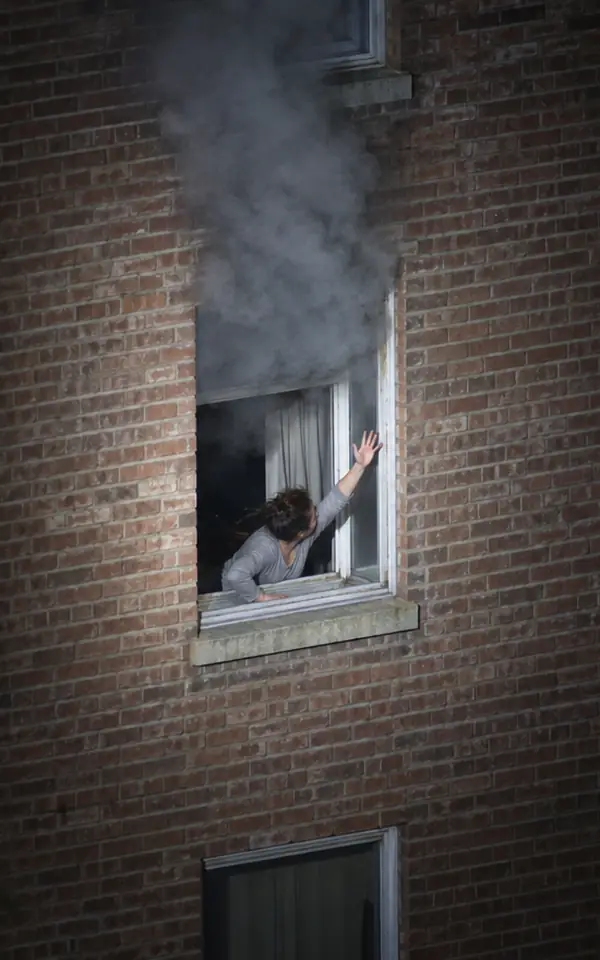
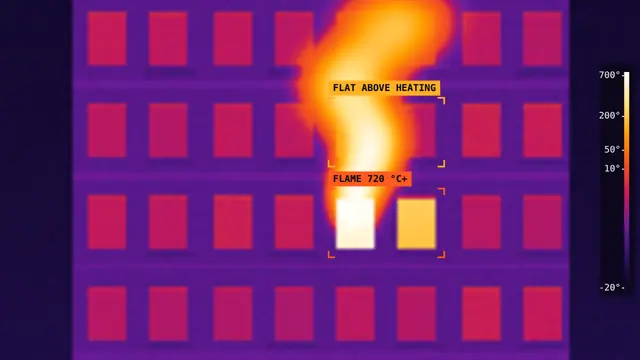
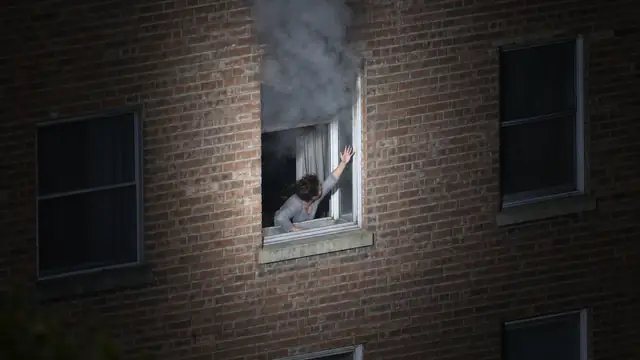
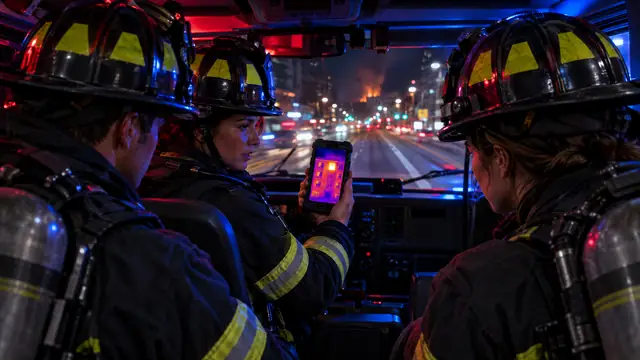
A concept film plays on its own in four steps. Arrive: on the alarm, FireFly drones get to the fire first. Thermal: a thermal sweep shows where the fire is through the smoke, on the 4th floor, and heat rising to the floor above. People: the camera closes in on a window and finds a person waving for help. Crew: that picture reaches the officer's phone; the officer sends a ladder to the window and crews to the fire floor and the floor above, and the firefighters go in knowing.
Drone swarm for fire crews · In development
FireFly is a firefighting drone swarm in development for fire crews. It is designed to launch on the alarm, find the fire and the people it can see before the engine arrives, and start cooling the fire from outside on the officer's word. Firefighters arrive knowing, and put it out.
01 · The problem
Every fire starts the same way. Smoke fills the room, the crew cannot see inside, and the first minutes are spent finding out. In a modern furnished room, flashover can arrive in 3 minutes 20 seconds.
Crews go in without knowing where the fire is, which way it is running, or who is still inside. The first person through the door is the one who finds out.
Before anyone can attack, someone has to look: a walk round all four sides, a ladder, a radio relay. The fire keeps growing the whole time.
Callers report what they can see: smoke, an alarm, a smell. How big it is, and exactly where, is usually found out on arrival.
02 · Same building, two cameras
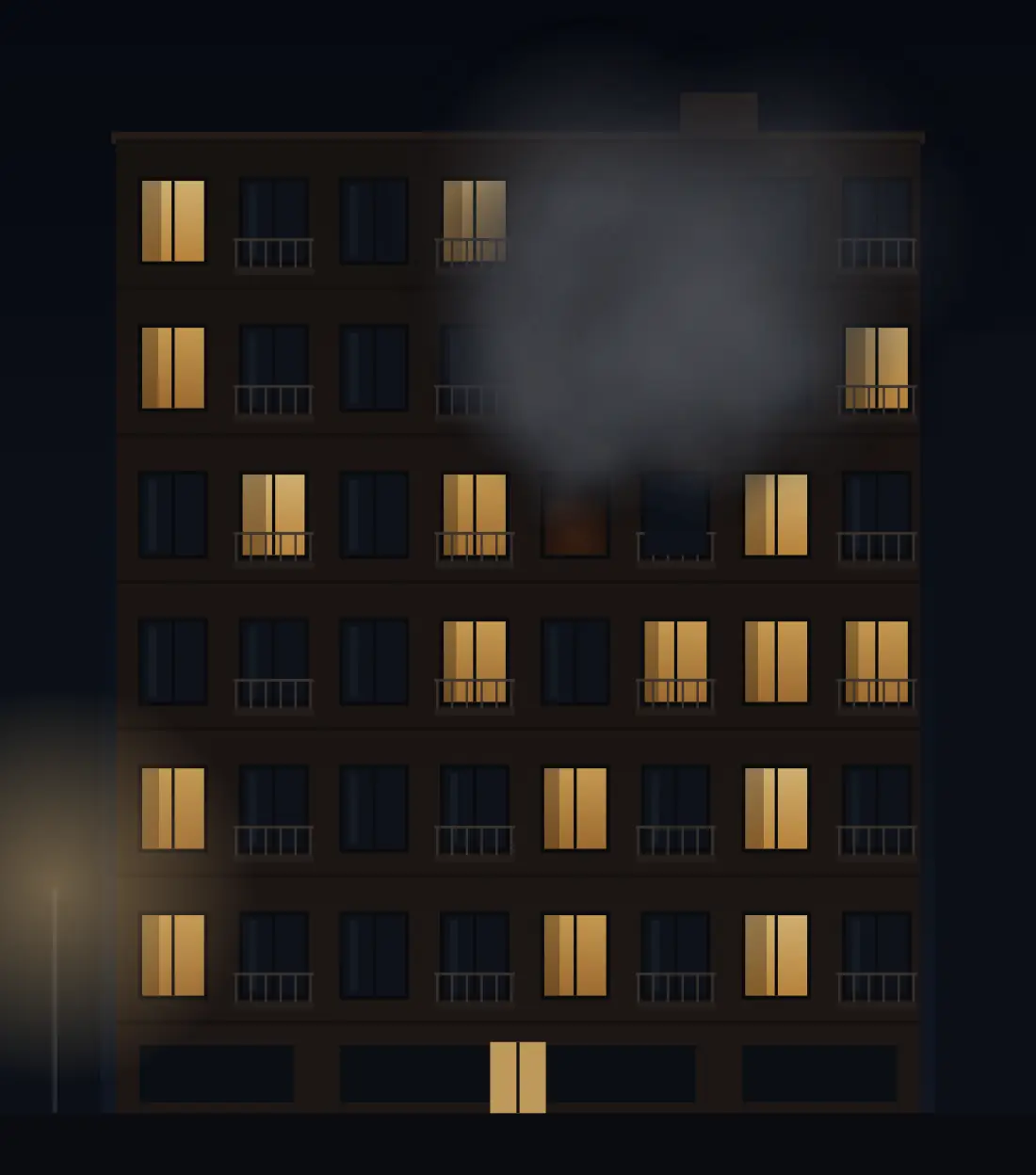
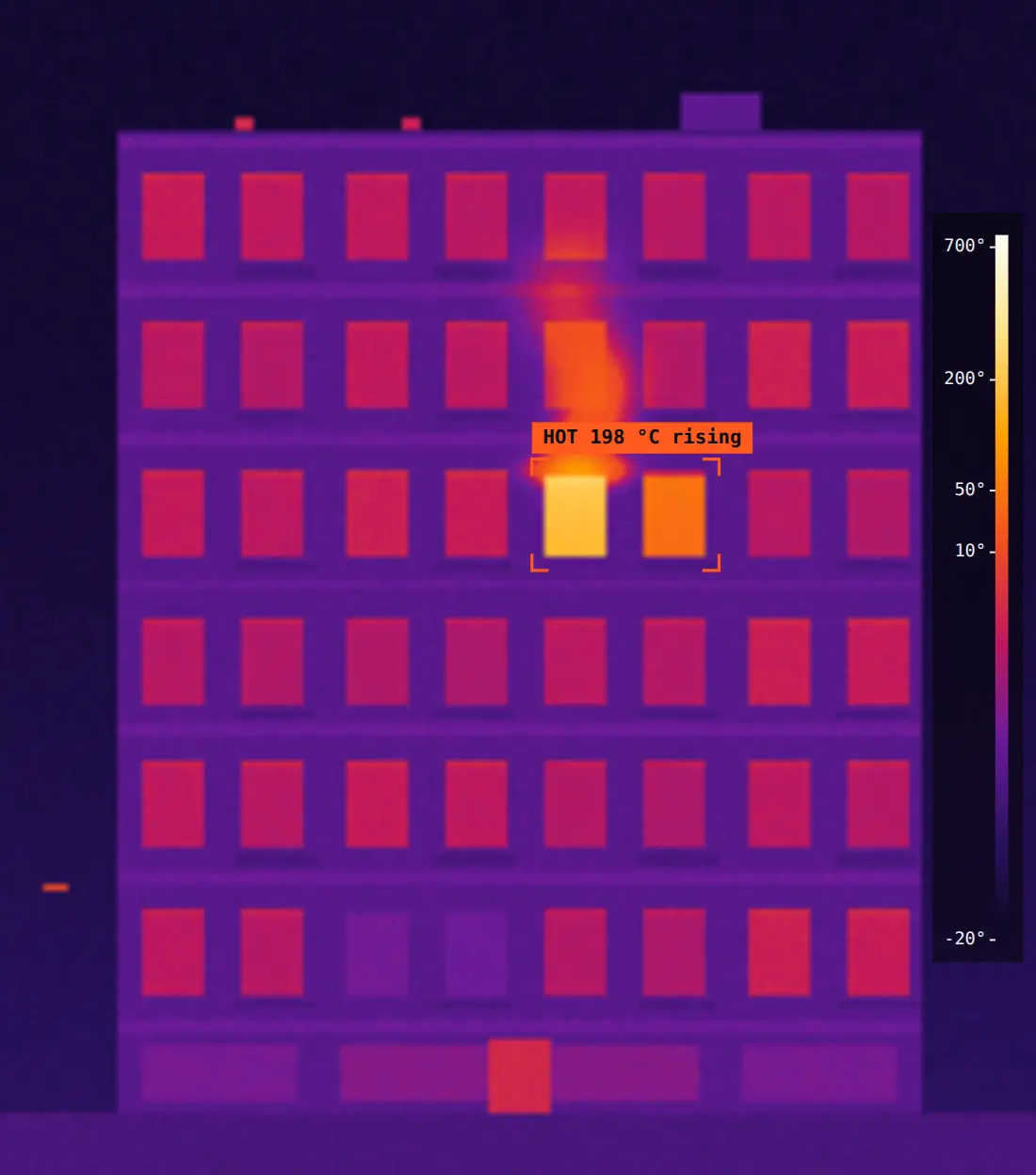
Long-wave infrared reads heat, not light, so smoke hides far less from it. Choose what is happening inside one flat, then drag across the building to compare the two views from the street.
 Camera
Thermal
Drag · or use arrow keys
A simulation drawn in code, not sensor output. Temperatures are illustrative. Thermal does not see through window glass: it reads the glass, the frame and anything hot that escapes. Our demonstrator streams live infrared today; captures on request.
Four floors up · third flat from the left
of the incidents fire and rescue services attended in England in the year to March 2026 were fire false alarms: 255,047 of 641,227. Around two thirds of those came from automatic alarm systems, where a view from outside often shows nothing.
UK Government (MHCLG), 2026A call comes in with whatever the caller could see. FireFly is designed to be looking at the address within minutes. When heat or smoke is showing, the officer knows it is a working fire while still on the road, and can ask for more help before the first engine stops.
FireFly never cancels a call, and never downgrades one. An outside view cannot rule a fire out. When nothing is showing, someone still goes to confirm, and how many is the service's decision.
03 · What the crew sees on arrival
The officer's walk round the building takes minutes the fire does not give back. FireFly is designed to fly it first and send the answers ahead.
All four sides in thermal: the seat of the fire and which way it is moving. The first line goes to the right door.
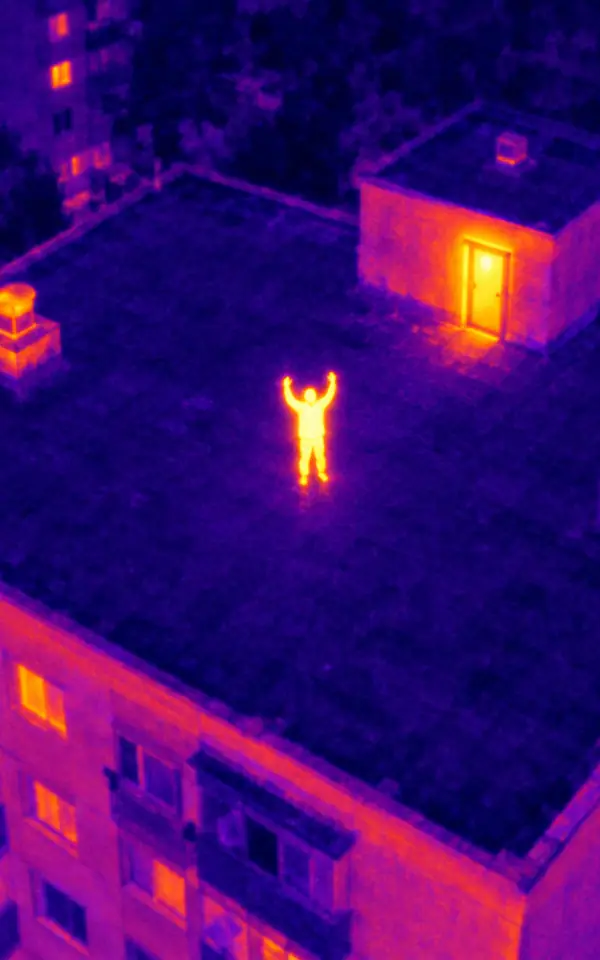
A person in the open stands out in thermal, through smoke and in the dark. The crew knows to go up before anyone has to shout.
The side of the building nobody on the street can see. The ladder goes to the right window, first time.
What it cannot see, it says. These are the people FireFly can see from outside. Anyone behind a wall or a closed window does not show, so the search is still the crew's.
Concept screens. The building view is a simulation and the two pictures of people are AI-generated; none of it is sensor output.
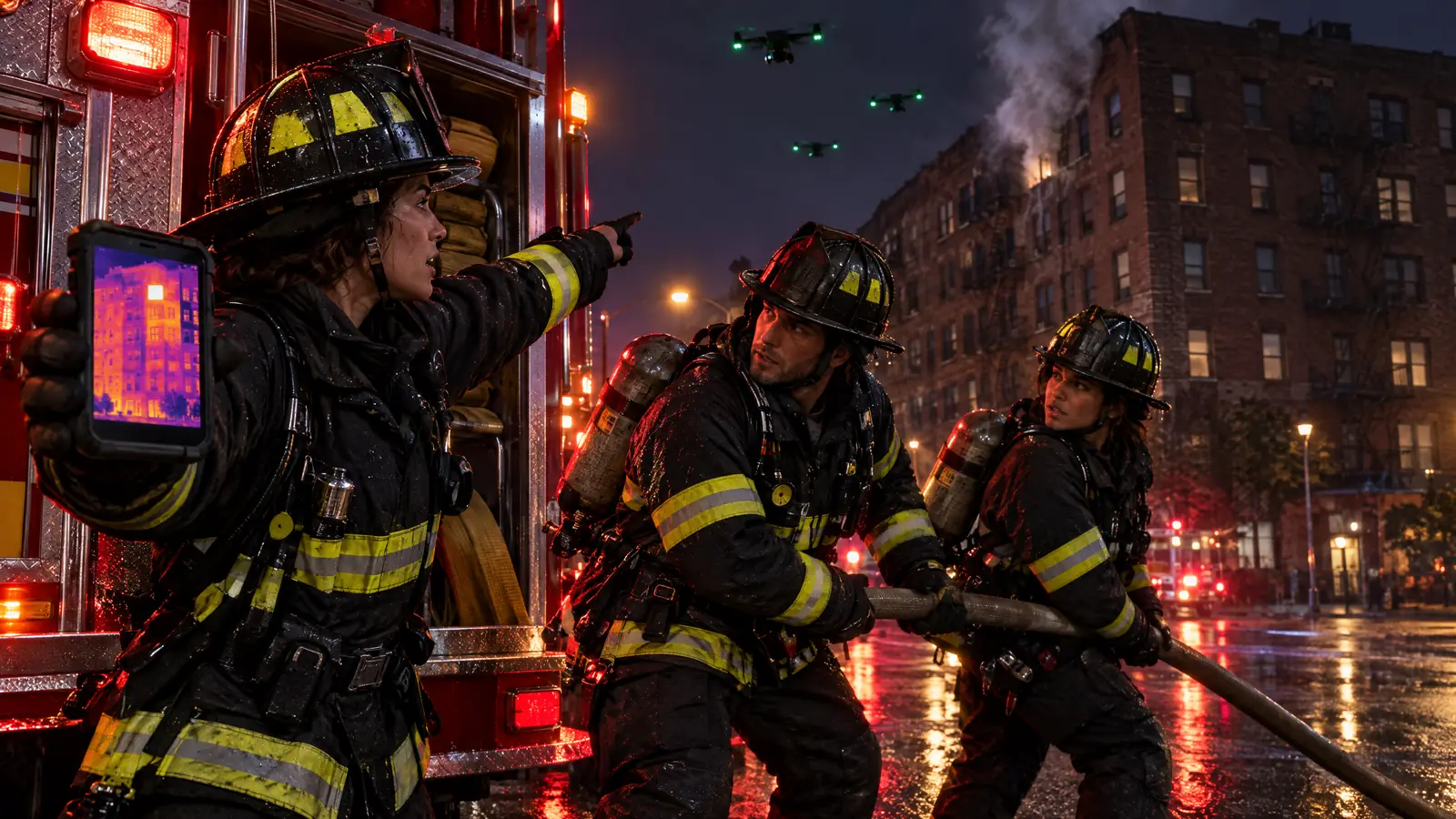
FireFly brings the picture.
Firefighters bring everything else.
Privacy, by design. FireFly is designed to record only during an incident. Pictures of people go to the responding crew and the incident record. Who else may see them, on which devices and for how long is set by the fire service and agreed in writing before a pilot flies. How we treat aircraft imagery
04 · How it works
Scroll through it. The swarm is first, and the crew is the ending.
One tap on the address and the swarm lifts off its station nest as the crew turns out. Design target: airborne in under 90 seconds.
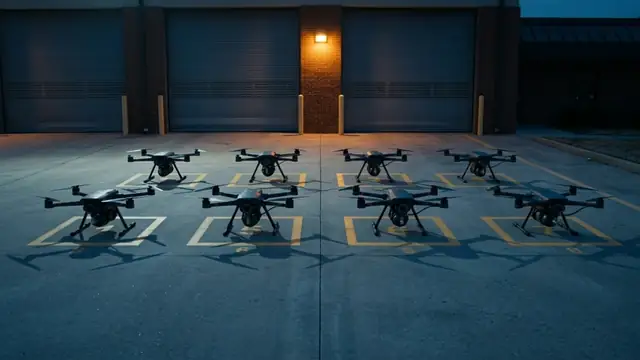
It flies the straight line while the engine takes the road, holds off, and starts looking.
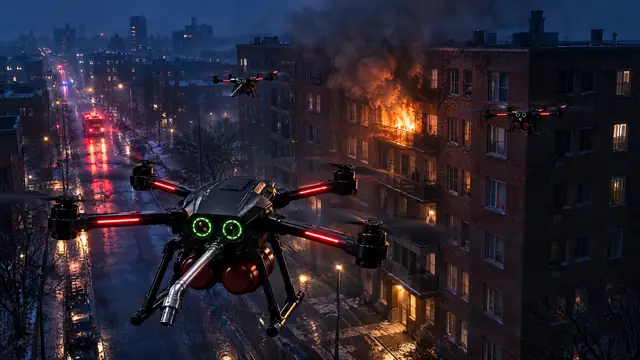
One lap of all four sides in thermal: where the fire is, how hot, and which way it is moving.
Someone on the roof. Someone at a rear window. Each is marked and sent ahead. People it cannot see may still be inside.
The pictures reach the crew before the engine stops. On the officer's word, the swarm starts cooling the fire from outside.
The cooling stops before the crew goes in. The line goes to the right door, the ladder to the right window, and the swarm watches over them.
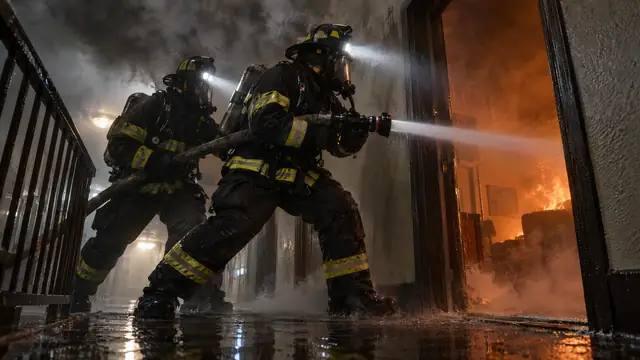

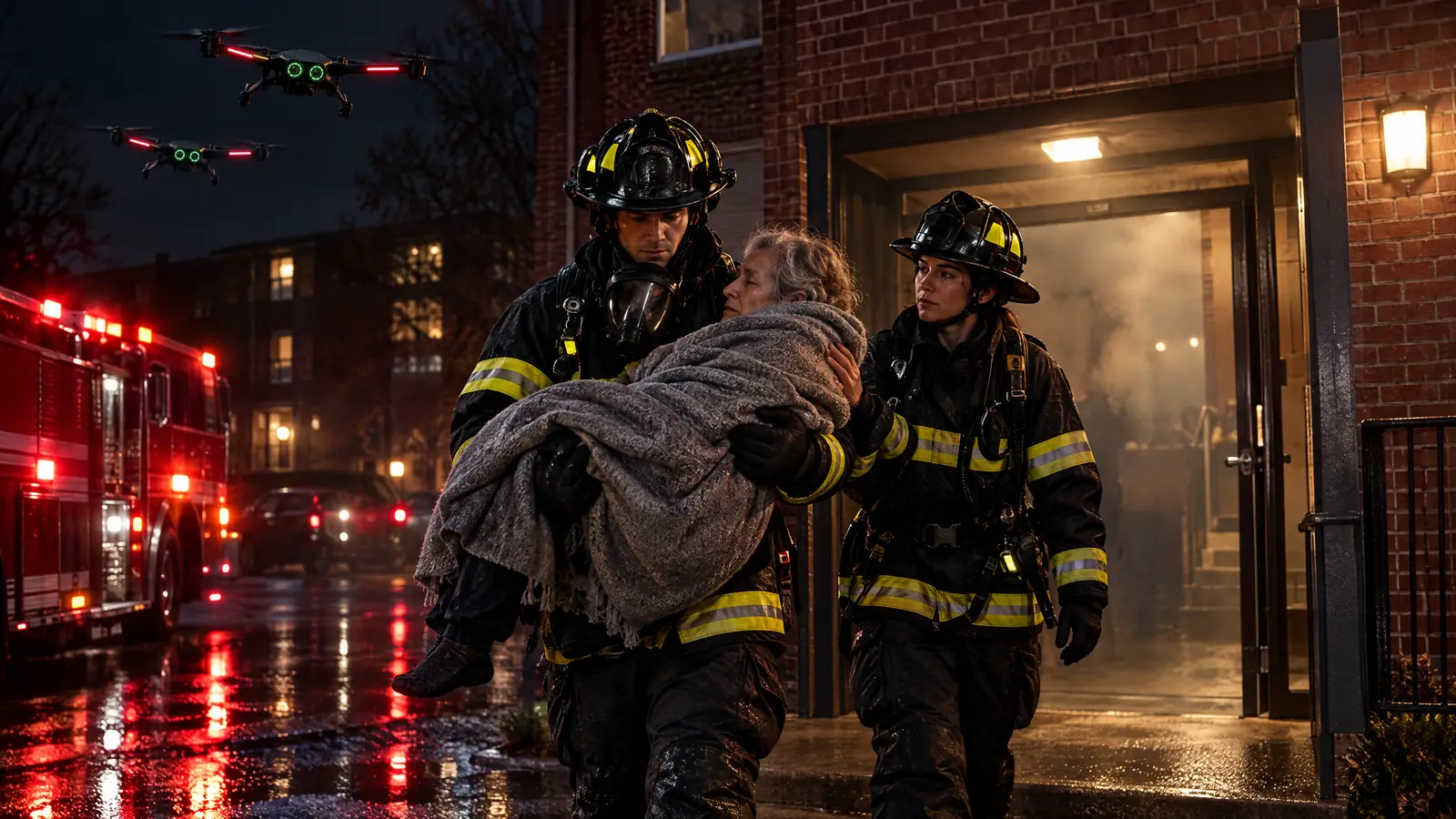
Every decision stays with the firefighter.
Concept animation and AI-generated scenes of the system as designed. What’s inside FireFly →
05 · Meet FireFly
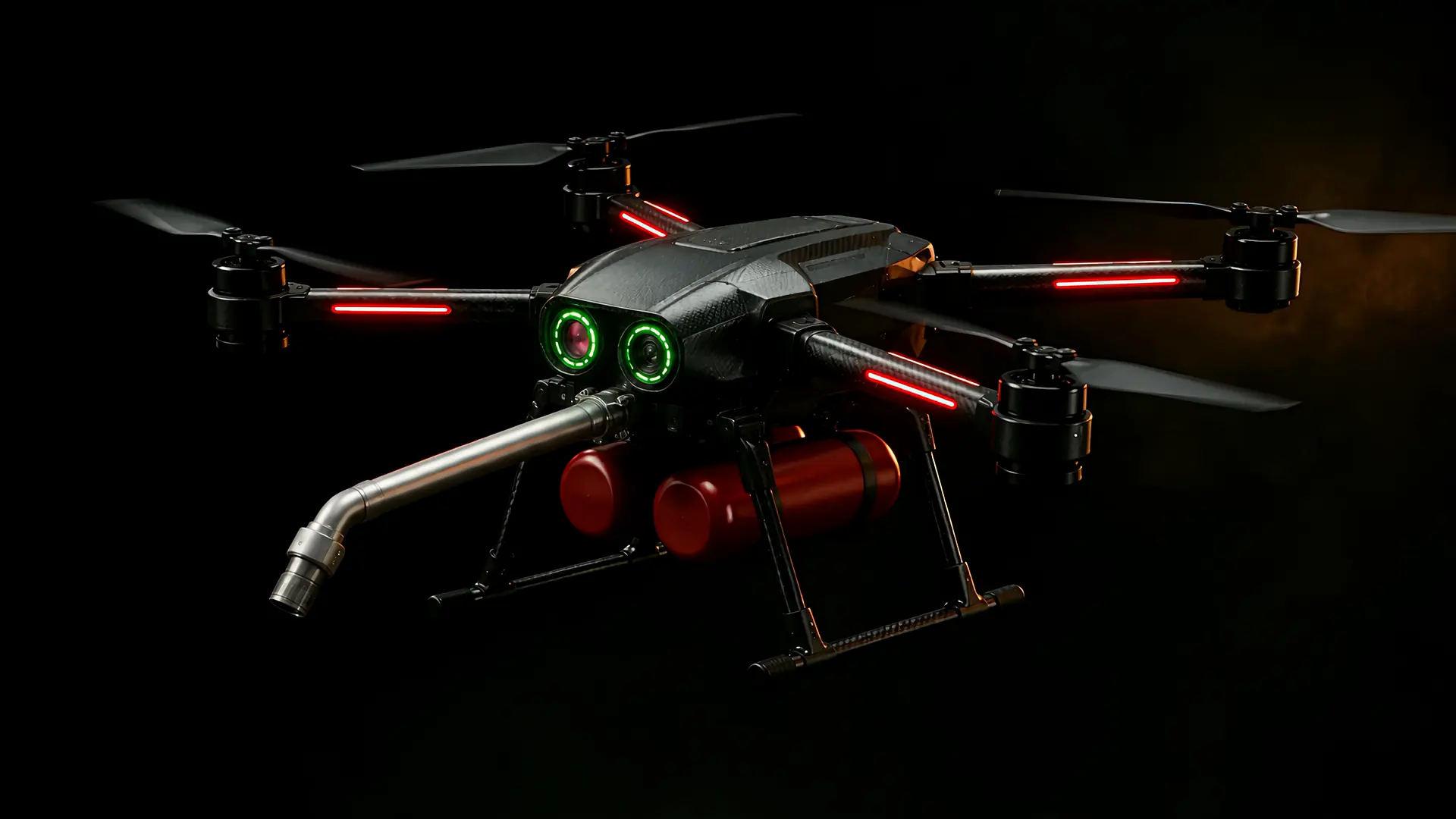
Concept design · AI-generated render. Today's flying demonstrator is a Holybro X500 v2 on PX4.
06 · What changes for the crew
From dispatch to airborne, launching from the station nest
Design targetAircraft coordinated by a single operator
Design targetPod swap on the nest, not counting the flight there and back
Design targetPauses in suppression while aircraft rotate
In simulationThe "with FireFly" lines describe the system as designed. Arriving ahead of the engine depends on flight beyond the pilot's line of sight, which is in development and needs permissions we do not yet hold. How much fire a ring of aircraft can check has not been measured yet. The figures above are design targets and simulation results, not independent field measurements; we will publish measured values as field tests complete.
07 · Where it works
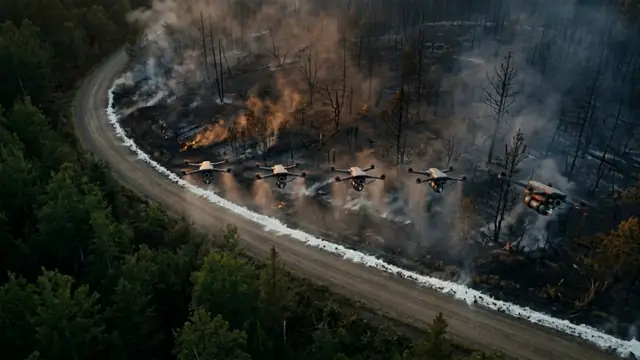
Find the front through smoke, map the perimeter and hit hot spots along roads and ridges, so crews are sent where the fire is going.
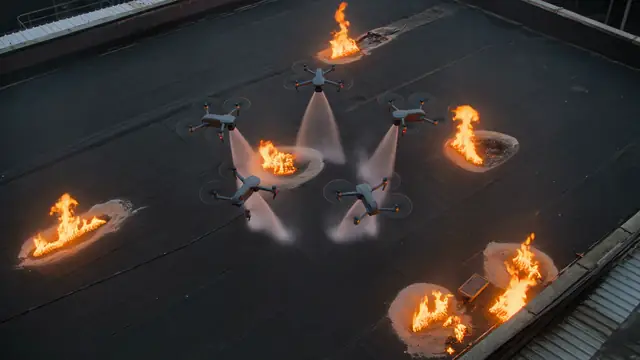
Warehouses, plants and refineries: large roofs, fast smoke, dangerous interiors. The swarm gives the site team and the fire service the first picture, and starts work on the roof while they are on their way.
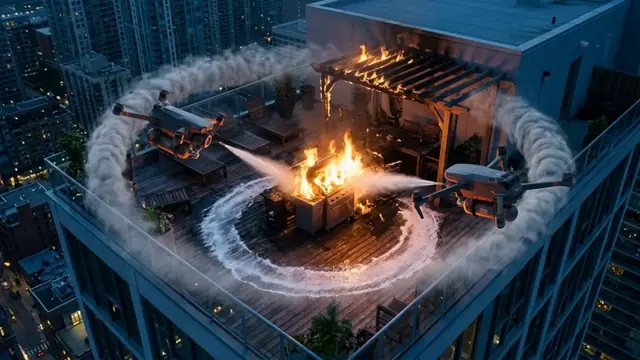
The first picture of the upper floors while ladders are still being set: which flat, which way it is moving, and who is on the roof or at a window.
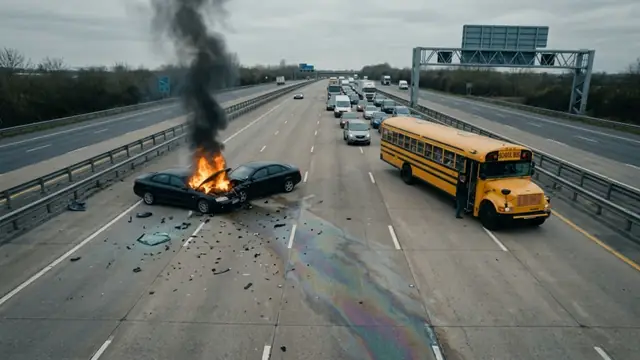
Vehicle fires and crashes: the scene assessed, people located and the crew briefed before the first engine arrives.
Scenes are AI-generated concept visuals.
08 · Safe by design
These rules are enforced in the aircraft's configuration, not in a policy document. We will not trade them for a smoother demonstration.
A pilot takes over from autonomy in one movement. The transmitter outranks the software at every instant of every flight.
If the link drops, failsafes bring the aircraft home. We never loosen failsafe timings to hide a weak link.
The operator interface runs over 5G from anywhere, and every firefighter on scene can watch the live view on a phone. Underneath, the local radio and the physical transmitter stay in charge: if the 5G link drops, the aircraft's failsafes take over.
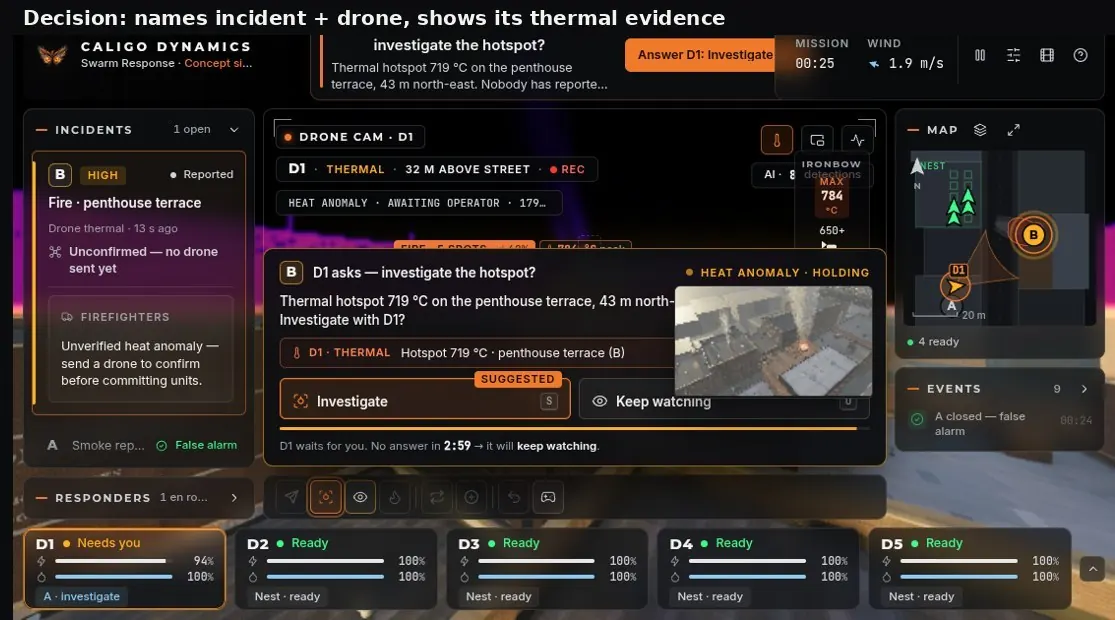
The swarm proposes. A firefighter confirms, every engagement, every time. The officer can stop it at any moment, and it always stops before a crew goes through the door.
09 · Inside FireFly
Flight, perception, avoidance, suppression and the data behind every mission. One system, built by the team that flies it.
A scanning LiDAR on board maps the geometry around the aircraft and feeds obstacle avoidance. When smoke thickens and laser returns fade, the thermal array measures how blind the LiDAR has become, and the aircraft slows down and lengthens its stopping distance on its own. It never mistakes smoke for open sky.
A long-wave infrared array reads heat instead of light and streams live to the ground station alongside visible video.
PX4 on a Pixhawk 6C with a dedicated companion computer: verified offboard control, takeoff referenced to the ground it left, map-point navigation at held altitude and an orbital scan on arrival.
A GPU-accelerated detector watches the live feed and raises hotspot alerts, each stamped with position, heading and altitude.
A potential-field planner fed by the LiDAR scan steers around obstacles, with a tangential bias so the aircraft escapes dead ends instead of hovering in them.
A servo-actuated valve on a pressurised canister, commanded over MAVLink, releases agent as a directed cone once the operator confirms.
Adaptive control rescales thrust as the payload empties, and a standby aircraft matches orbital speed to take a vacated slot, so suppression never stops.
Over 5G the operator interface opens from anywhere: map, live video and mission commands. Every firefighter on scene can open the drone's live view on their phone, and the aircraft sizes its video to the network it is on.
Every flight is segmented, logged and closed automatically: telemetry, command latency, link health and every detection event. Nobody has to remember to press record.
This section describes the full system as designed. What is flying on the demonstrator today, and what is still simulation, is set out under Is FireFly flying today?
10 · Play it
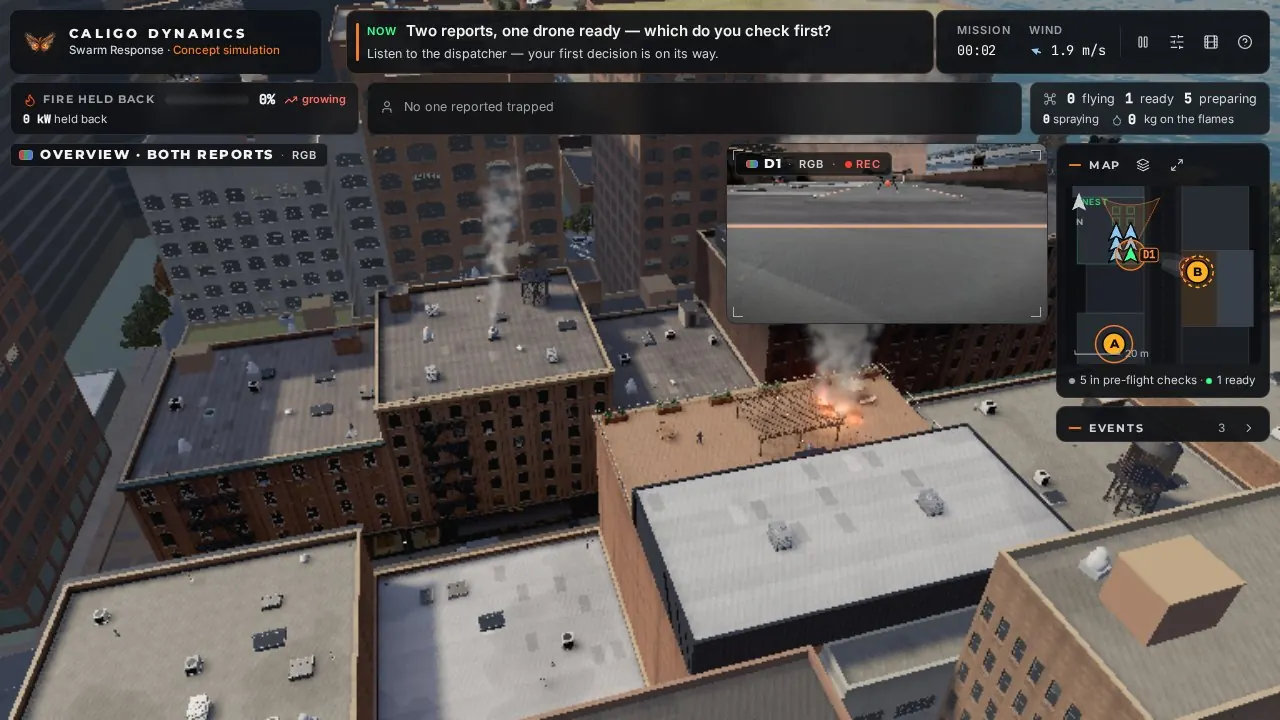
Our playable simulation puts you in the operator's chair. The drones fly themselves; you make the calls.
“The drones fly themselves. You make the calls.”
Concept simulation. Flight times, spray range and hand-off timings are game values, not measured performance.
11 · Next
We are looking for the first fire services to design a controlled field pilot with. If you run a fire service, a forestry operation or an industrial site, we would rather hear your objections now than discover them in a field.
Why now, the wedge, the objections answered, the roadmap and what the money buys, with flight data behind every claim.
Sources