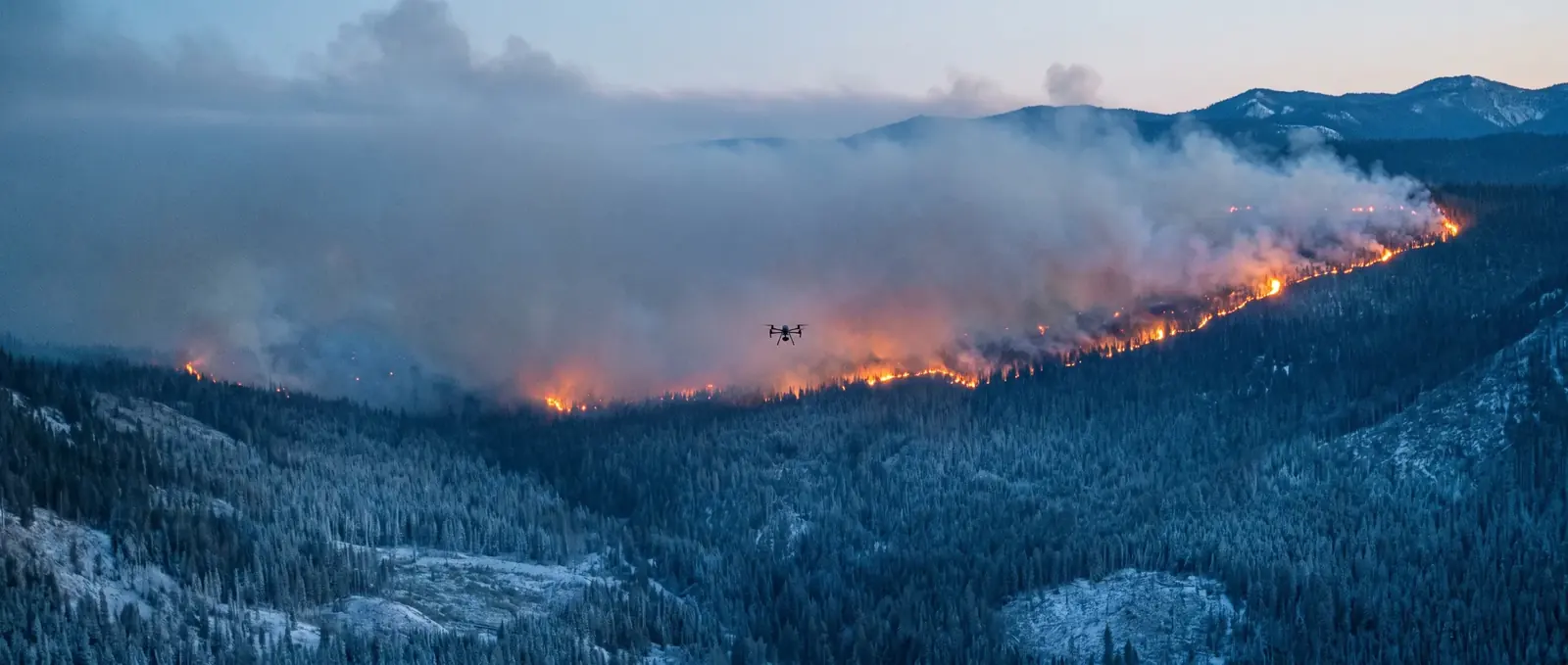
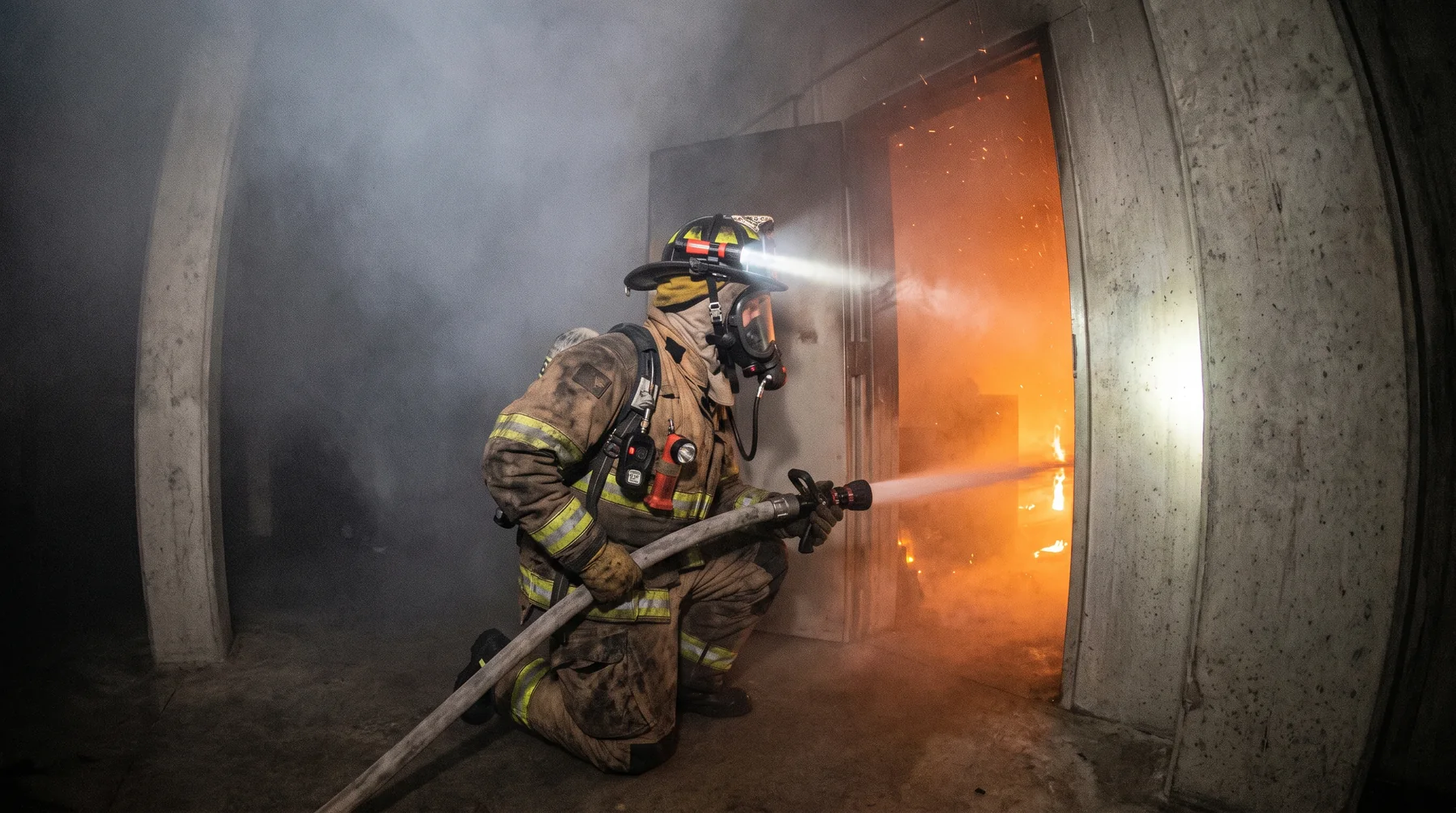
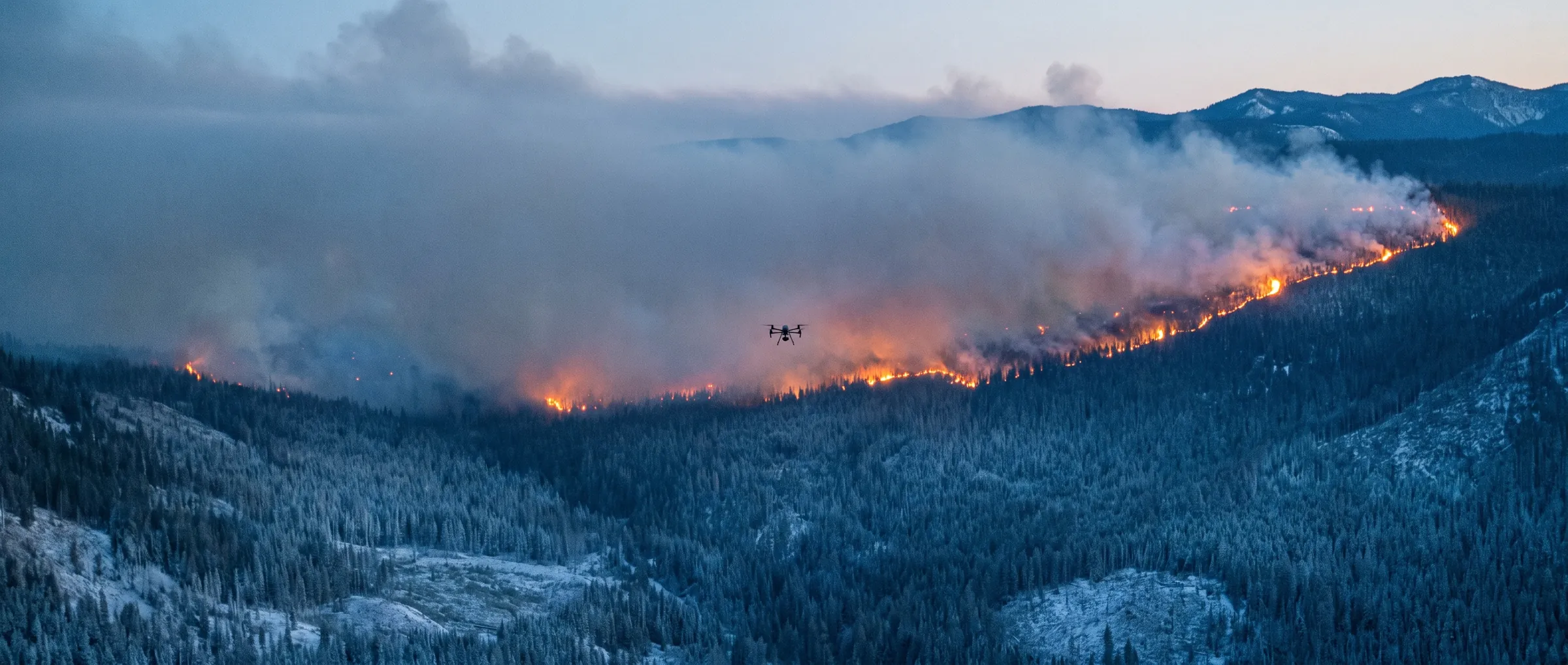
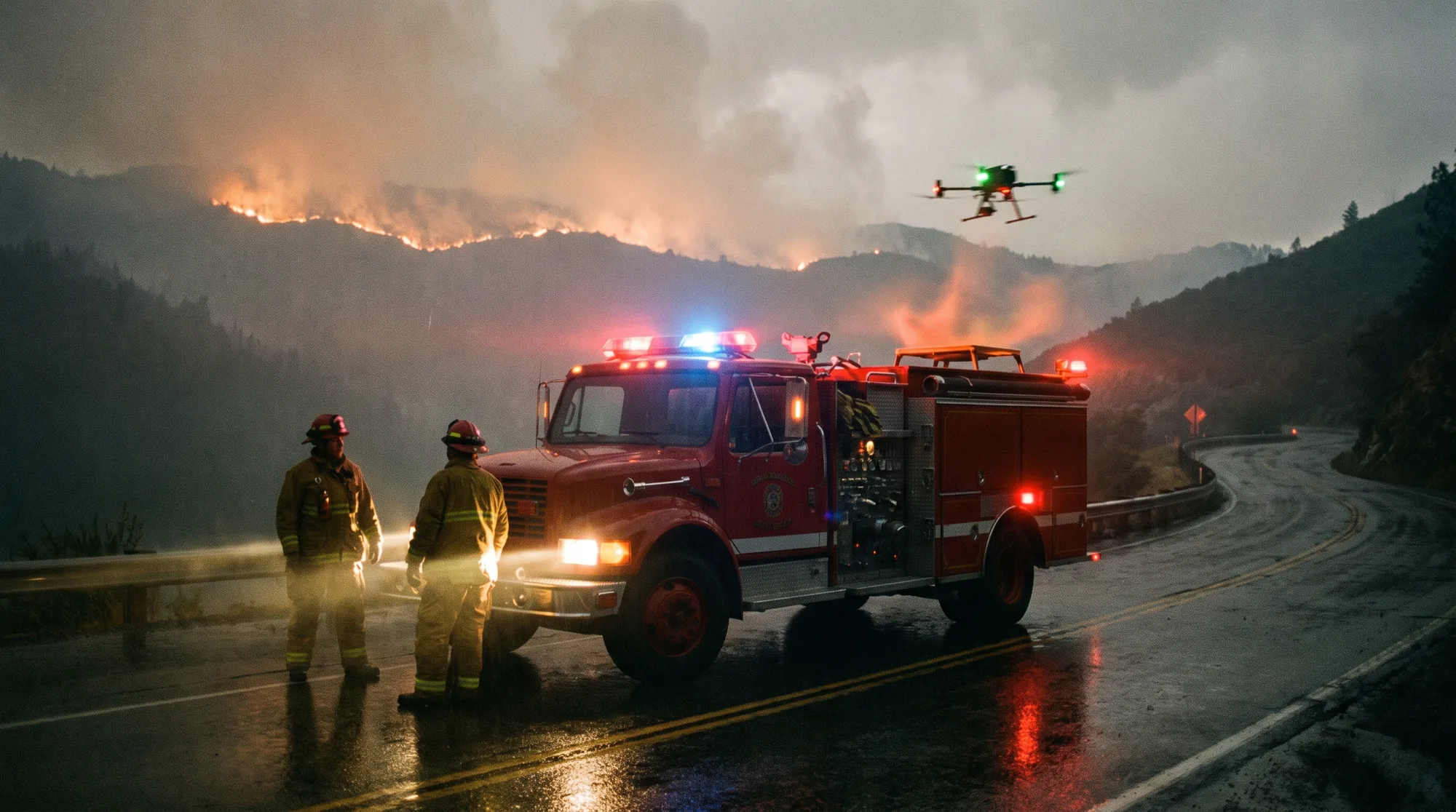
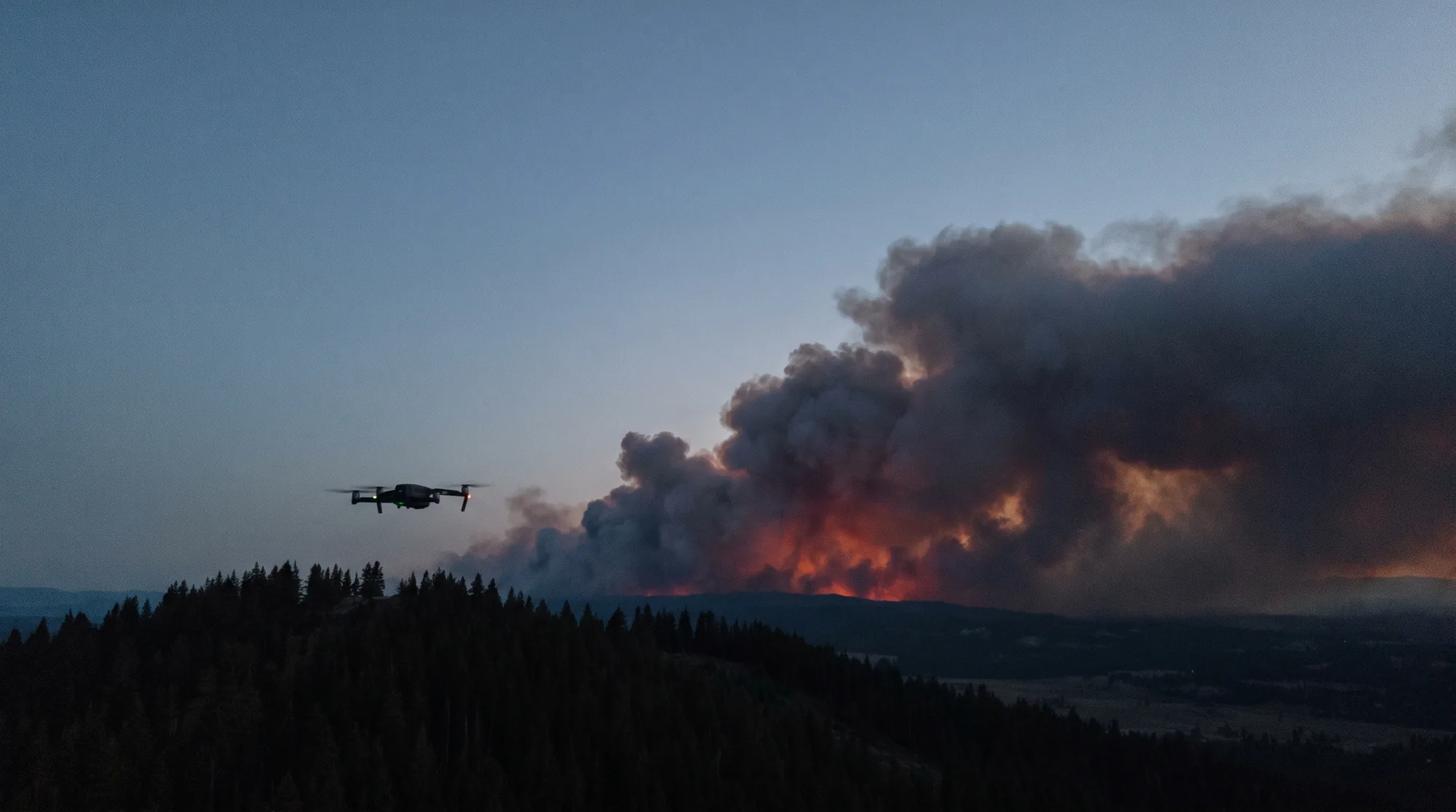
In our launch market, the national forestry directorate went into the 2025 fire season owning nine helicopters and fourteen aircraft. To cover the season it leased eighty-one more (68 helicopters and 13 fixed-wing) at a reported cost of about ₺10.2 billion for the year12.
That is a budget line that already exists, that recurs annually, that grows with every bad season, and that is spent on assets which cannot fly at night, cannot fly in smoke, and cannot be first on scene.
Two figures, honestly. The national forestry service counted 81,473 hectares burned on forest land in 2025; the EU's satellite service mapped 162,188 hectares across all land cover. Both are official; they measure different things. We quote both rather than the more flattering one.
Market context
Sized honestly
Every number in this box comes from a commercial research vendor rather than a primary source. They are not independently auditable and they disagree with each other. We present them as estimates, with the vendor named, because pretending otherwise wastes everybody's diligence time.
- Fire suppression systems → $23.0bn 2025, 5.4% CAGR (Grand View)13
- Cross-check → $22.6bn 2025, 4.9% CAGR (Mordor)
- Crewed aerial firefighting → $1.6bn 2025 (GM Insights)
- US federal suppression spend → $3.17bn 2023 (NIFC, primary)
Isn't this just detection? The literature says faster detection doesn't pay for itself.
It does say that, and the paper is worth reading. Huang & Wichmann (PLOS ONE, November 2024) analysed 4,934 Western Canadian fires and found each additional hour of reporting delay raises suppression cost by roughly a quarter of one percent. Their own conclusion is blunt: investment in detection is not justified on suppression-cost savings alone10.
We agree with them, and it is why we are not a detection company. Detection is a prerequisite, not the product. The value is in avoided loss, which is a different and much larger number: the Australian National University modelled responding to all fires within thirty minutes and put the saving at AU$8.2 billion over thirty years11. A firm that sells you a faster alarm is selling into the weak case. We intend to sell the intervention.
Why hasn't DJI or Skydio already done this?
Because they build superb sensors that fly, and this is not a sensing problem. It is a work problem: lift a mass, hold a geometry in thermal turbulence, discharge it accurately, and then do it again without pausing. That demands a payload architecture, an adaptive controller, a rotation logistics model and a command-authority story that satisfies a fire chief, none of which improve a camera platform's core business.
It is also a channel they do not want. Selling into fire services means safety cases, procurement cycles and shared liability for an operational outcome. That is a moat if you are willing to walk into it and a reason to stay away if you are not.
This is one founder with an off-the-shelf drone.
Largely, yes. The flight-control integration, the ground station, the thermal and detection lane, the automated flight-data pipeline and the beyond-line-of-sight link were built and flown by the founder, on hardware bought with his own money, and they work, including the unglamorous parts, like an aircraft that logs every flight without being asked and picks its own video bitrate from the radio it woke up on.
That is the signal. A team that has already put an autonomous aircraft in the air and knows precisely which of its own claims are simulation is a considerably better bet than a larger team that has not yet found out.
Where is the company, actually?
Caligo Dynamics Inc. is a Delaware C-Corporation. You can invest in it on standard instruments today, with no cross-border structuring exercise.
Engineering and flight testing run out of our launch market, which burned 162,188 hectares in 2025, has extensive terrain to test over, and where the cost of iterating on real hardware is a fraction of the Bay Area equivalent. The problem is outside the window and the runway goes further.