Applications
Wherever fire strikes,wherever visibility fails.
Four places where the first minutes are lost to smoke, and what FireFly does in each. Every section ends with what is true today, because a fire chief should never have to guess which parts are real.
Scene clips on this page are AI-generated concept visuals.
01 · Wildfire
Find the front through the smoke, and hold the line.
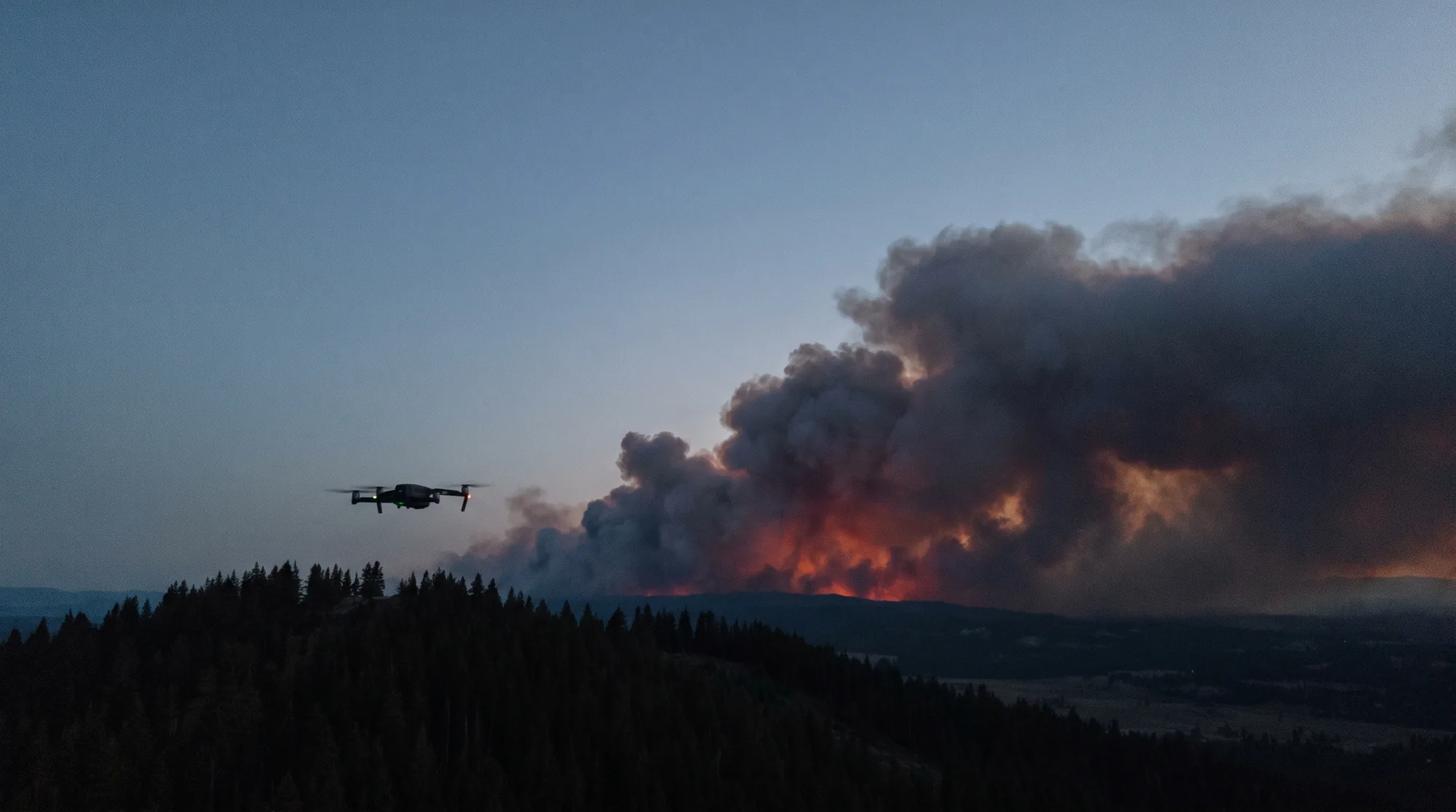
Wildfire is a race between the fire front and the people trying to get ahead of it. Smoke hides the front, the wind moves it, and crews commit to positions based on the last thing anyone could see.
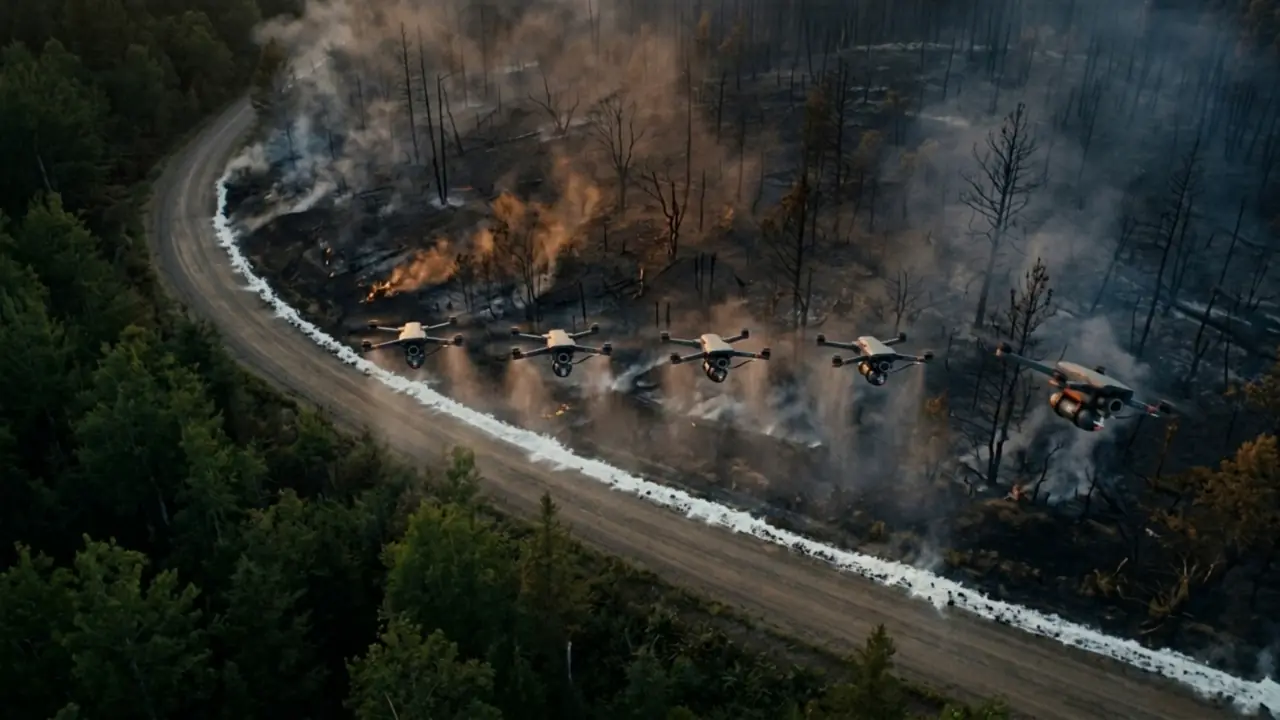
- The swarm launches from the appliance at the road and maps the perimeter in thermal, through the plume.
- Hot spots and spot fires ahead of the front are marked on the live map and passed to the crew.
- With a firefighter's confirmation, aircraft work the hot spots in rotation so suppression never stops.
- Early detection
- Perimeter mapping
- Reduced spread
- Crew safety
True today: thermal perception and hotspot alerting fly on our demonstrator. Sustained suppression needs a larger airframe; that is the first thing the raise buys.
02 · Industrial sites
On the roof before the crew is through the gate.
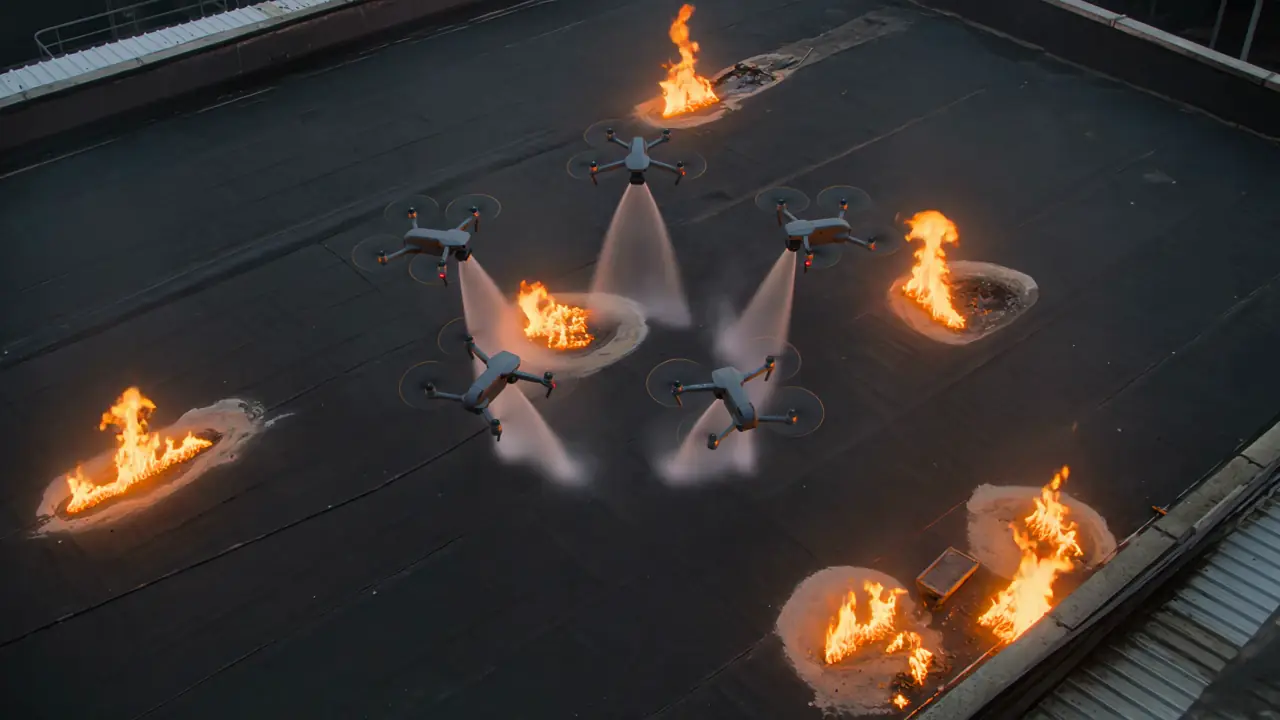
Warehouses, plants, refineries and logistics hubs combine large roofs, dense smoke and interiors nobody should enter blind. A site with its own nest gets eyes and first suppression in the time it takes to sound the alarm.
- An alarm or an operator's tap sends the swarm from the site's own nest.
- Thermal views of the roof and openings show where the fire is and where it is heading.
- Confirmed ring suppression holds the fire while the brigade arrives and sets up.
- Instant response
- Asset protection
- Environmental safety
- Less downtime
True today: the ring and rotation are validated in simulation, not yet flown with several aircraft. We are looking for industrial sites willing to host a controlled pilot.
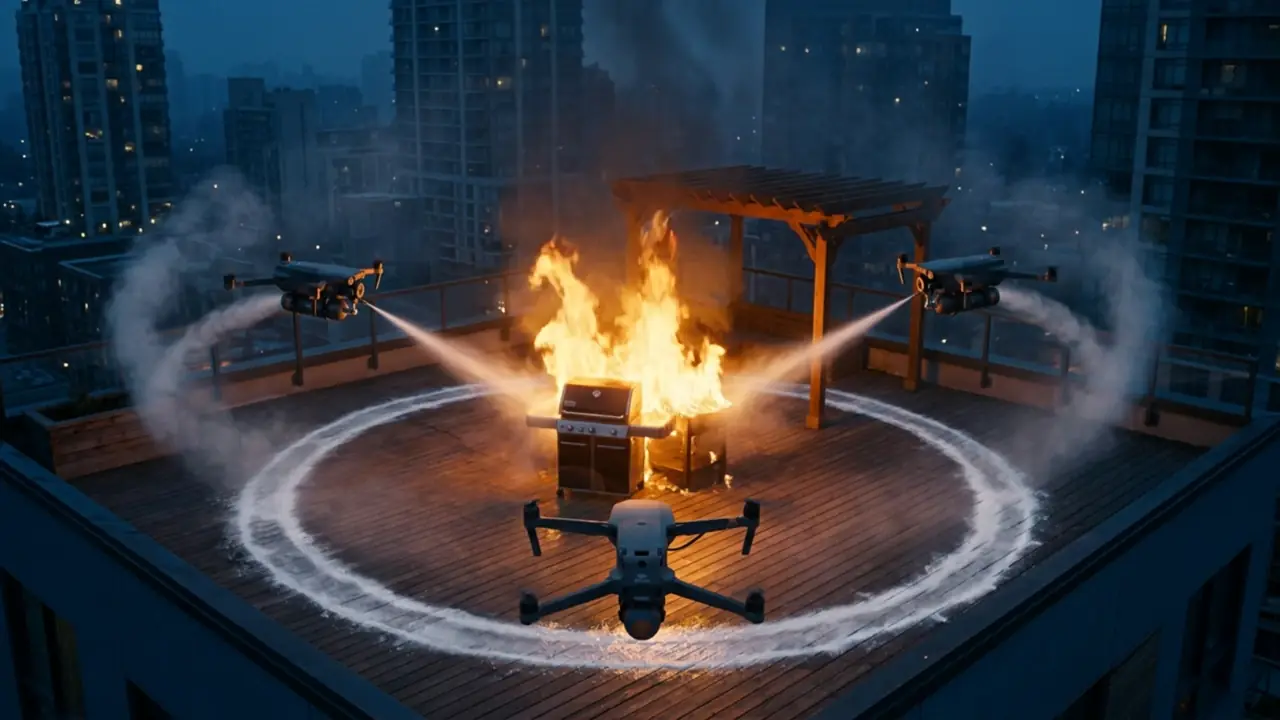
03 · High-rise & urban
Upper floors, rooftops and dense streets.
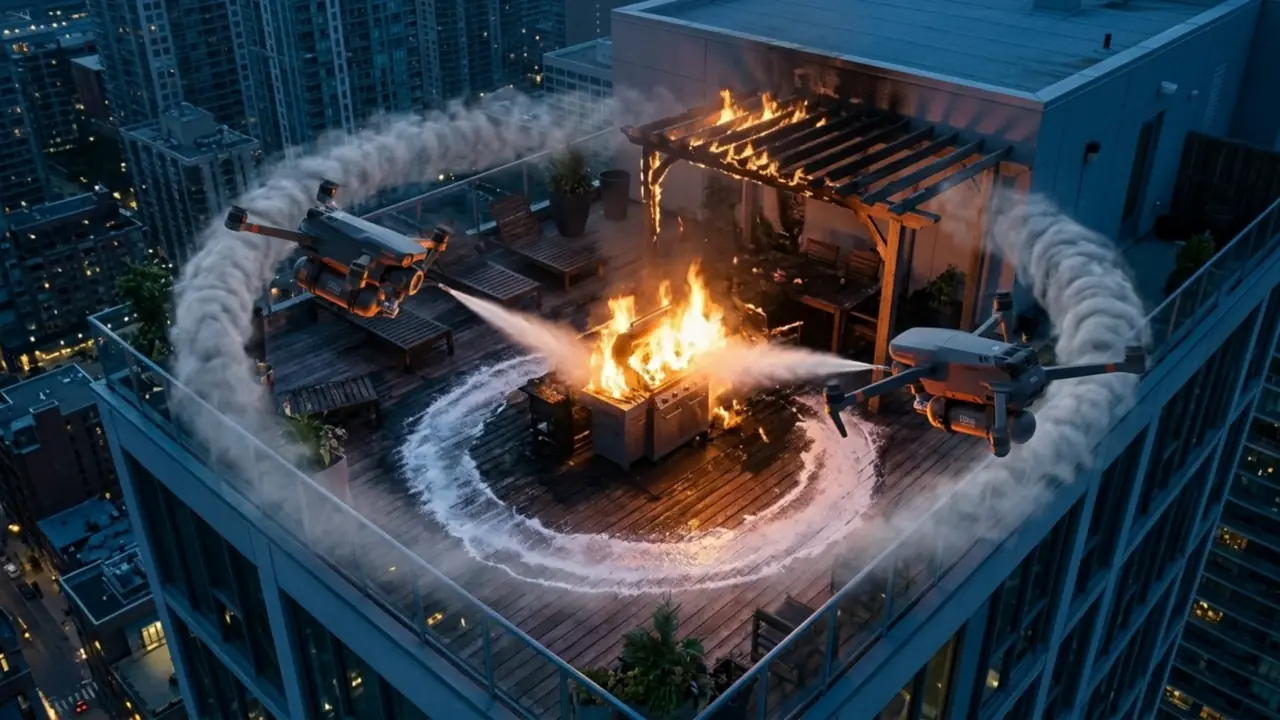
In a city, the fire is often above the ladder and behind the smoke. External access from the air gives an immediate look into every window, and directed suppression on rooftops and terraces while crews climb.
- The swarm rises alongside the facade and scans each floor in thermal.
- People near windows are located and reported to incident command.
- Confirmed external suppression from a fixed standoff, never flying into the building.
- External access
- Crew protection
- Immediate action
- Dense smoke
True today: urban operations need permissions we do not yet hold. We will work inside each city's aviation and fire-service rules, with a safety case, before any live flight.
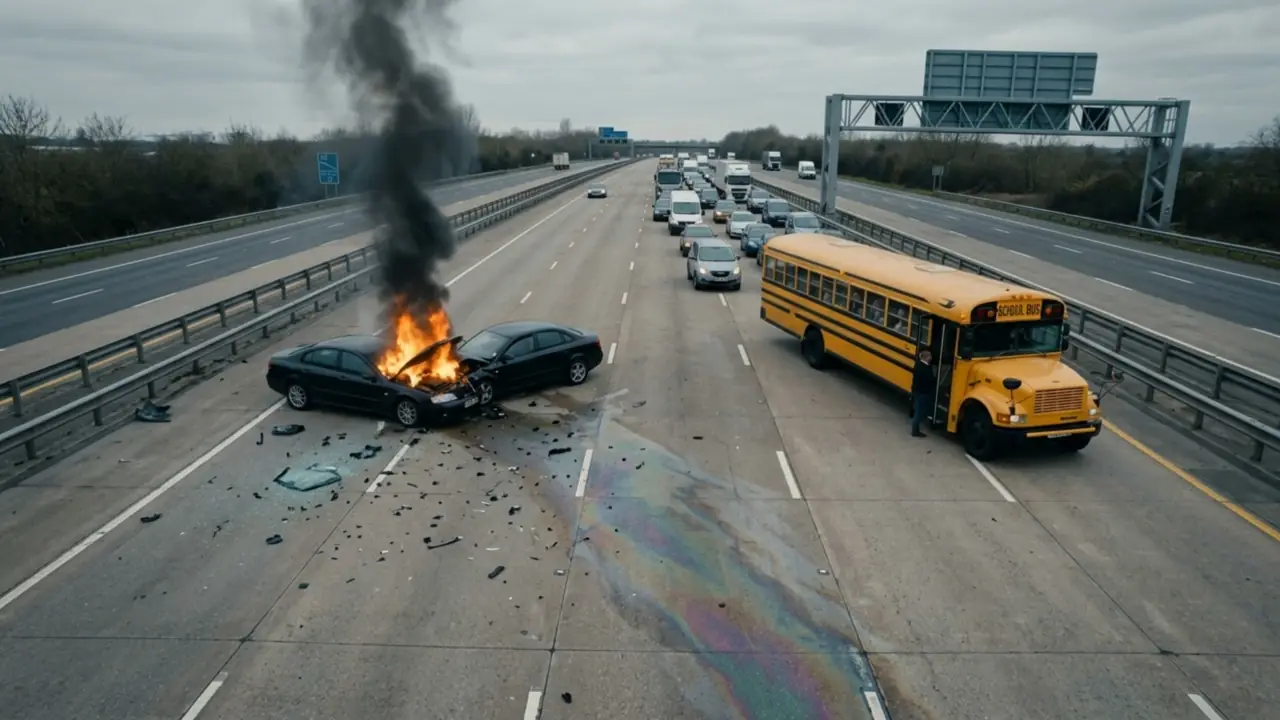
04 · Roads & emergencies
First eyes on a highway fire.
Vehicle fires and multi-car crashes are over or out of control in minutes, often far from a station. An aircraft that arrives first tells the crew what they are driving into.
- The nearest nest launches to the reported location, following the road.
- The scene is assessed in thermal: burning vehicles, people, fuel on the road.
- The crew arrives briefed, and confirmed first suppression can start before the engine does.
- Versatile deployment
- Rapid response
- Hazard zones
- People located
True today: beyond-line-of-sight flight is on the bench, with range validation at 500 m and 1 km next. Search and rescue in hazardous zones is a future application we are not claiming yet.
Your ground
Which of these fires keeps you up at night?
Tell us the scenario. We will show you what FireFly would do, what it cannot do yet, and what a pilot on your ground would look like.